Mechanicsburg

The Summer Slide Is Real: What Parents Need to Know
The Summer Slide Is Real: What Parents Need to Know
For many families, summer feels like a well-earned break from busy schedules, homework, and academic pressure.
And children absolutely deserve time to relax, play, and recharge.
But there is an important difference between taking a break and completely stopping learning for several months.
Research has consistently shown that students can lose significant academic progress over the summer—a phenomenon commonly known as the “summer slide.”
Unfortunately, many parents do not realize the impact until the next school year begins.
What Is the Summer Slide?
The summer slide refers to the learning loss that occurs when students go extended periods without practicing academic skills.
Studies have found that students may lose:
- Math computation fluency
- Reading comprehension skills
- Writing stamina
- Overall academic confidence
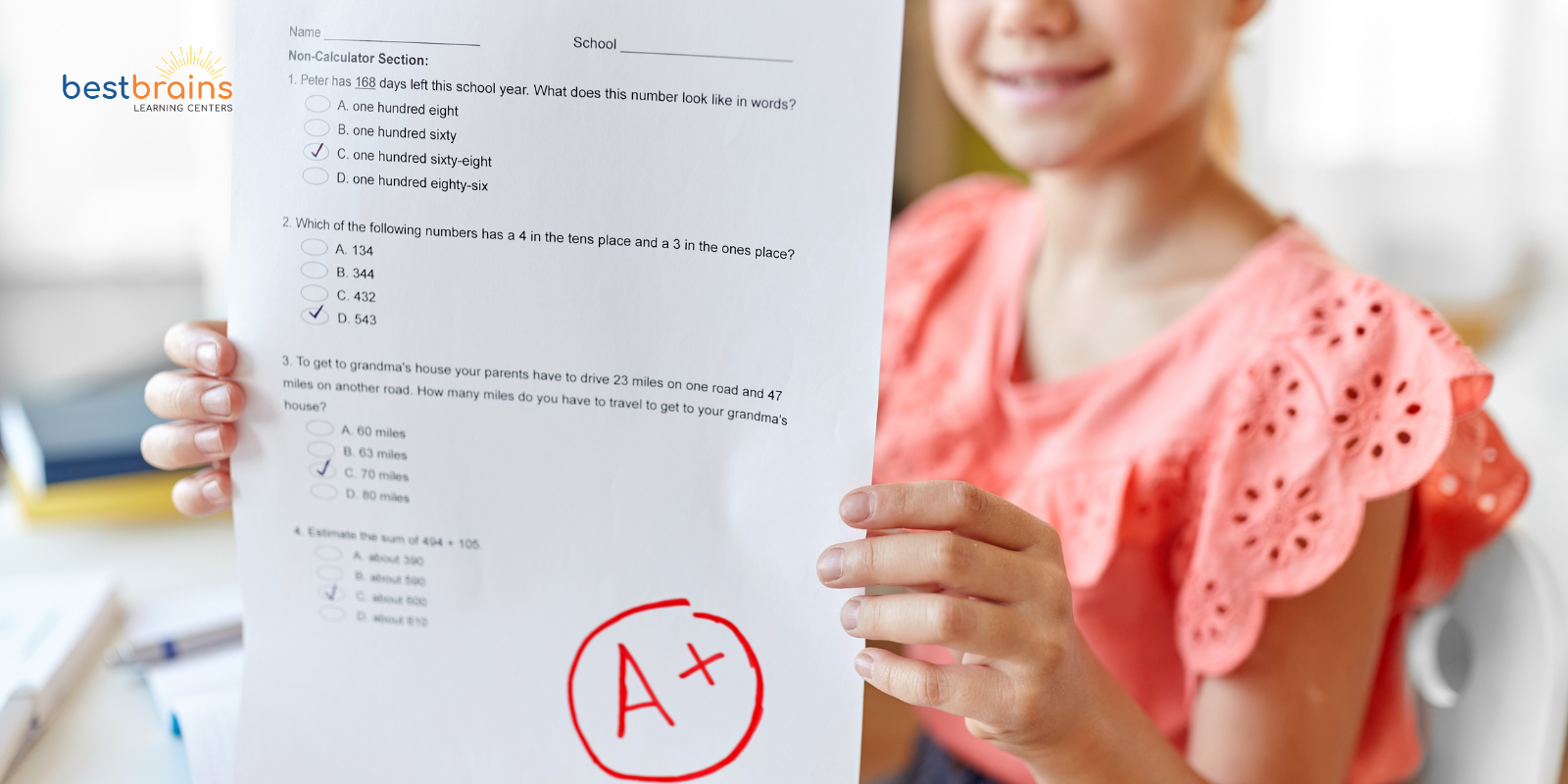
Math skills are especially vulnerable because they depend heavily on repetition and fluency.
Without regular practice, students often return to school needing weeks—or even months—of review before they are ready to move forward.
Why Math Skills Fade So Quickly
Math is cumulative.
Each new concept builds upon previous skills. When foundational skills weaken, higher-level problem solving becomes more difficult.
For example:
- A student who loses multiplication fluency may struggle with fractions later.
- Weak division skills can affect long division, decimals, and algebraic thinking.
- Slower computation increases cognitive load, making multi-step problems more frustrating.
Even bright students can appear to “fall behind” simply because important skills were not reinforced consistently.
The Confidence Impact Is Often Overlooked
The summer slide affects more than academics.
It also affects confidence.
When students return to school feeling rusty, they may:
- Hesitate to participate
- Feel overwhelmed by review material
- Lose confidence in subjects they previously understood
This is especially common in math, where confidence and fluency are closely connected.
Students who maintain practice over the summer often start the new school year feeling calmer, more prepared, and more capable.
Summer Is Actually an Incredible Opportunity
While many people think of summer as a time to pause learning, it can actually be one of the best times to strengthen skills.
During the school year, students are balancing:
- Homework
- Tests
- Sports and activities
- Classroom pacing
Summer provides something students rarely have during the academic year:
Time to build skills without pressure.
This makes it an ideal opportunity to:
- Strengthen weak areas
- Improve fluency
- Build confidence
- Get ahead before the next grade level begins
Consistency Matters More Than Intensity
Preventing the summer slide does not require hours of work every day.
In fact, small amounts of consistent practice are far more effective than occasional cramming.
Even:
- 15–20 minutes of math practice
- Daily reading
- Short writing exercises
Can significantly improve retention and reduce regression.
The goal is not to create school at home.
The goal is to keep the brain engaged.
How Best Brains Helps Prevent Summer Learning Loss
At Best Brains, our program is designed around structured, daily reinforcement.
Students benefit from:
- Short, manageable daily exercises
- Ongoing fluency practice
- Teacher guidance and feedback
- Gradual skill progression
This helps students maintain momentum while still enjoying summer break.
Rather than spending the fall relearning old material, students can begin the new school year ready to move forward confidently.
Final Thoughts
Summer should absolutely include:
- Rest
- Play
- Family time
- Exploration
But completely disconnecting from learning for months can create setbacks that are difficult to reverse.
The students who experience the greatest long-term success are not necessarily the students who work the hardest all at once.
They are the students who remain consistent.
And summer is one of the best opportunities to build that consistency.
References & Further Reading
- Cooper, H., Nye, B., Charlton, K., Lindsay, J., & Greathouse, S. (1996). The effects of summer vacation on achievement test scores: A narrative and meta-analytic review. Review of Educational Research, 66(3), 227–268.
- National Summer Learning Association. (n.d.). Summer learning loss research.
- Cepeda, N. J., Pashler, H., Vul, E., Wixted, J. T., & Rohrer, D. (2006). Distributed practice in verbal recall tasks: A review and quantitative synthesis. Psychological Bulletin, 132(3), 354–380.
- Willingham, D. T. (2009). Why Don’t Students Like School? Jossey-Bass.