Mechanicsburg
The Hidden Skill That Predicts Academic Success: Executive Function
The Hidden Skill That Predicts Academic Success: Executive Function
When parents think about school success, they usually think about reading levels, math grades, or test scores.
Those things certainly matter.
But there is another set of skills working quietly behind the scenes that often determines whether a child reaches their full potential.
It's called executive function.
While executive function isn't taught as a separate subject in school, it influences nearly everything students do each day. It helps children stay organized, manage their time, control impulses, remember directions, and work through challenges independently.
In many ways, executive function is the brain's "management system." Just as a conductor keeps every section of an orchestra working together, executive function helps students coordinate the many mental tasks required for successful learning.
The encouraging news is that these skills aren't fixed. They develop over time and can be strengthened with intentional practice.
What Is Executive Function?
Executive function refers to a group of mental skills that help us plan, focus, remember information, and regulate our behavior in order to achieve a goal.
Children use executive function dozens of times every school day, often without realizing it.
For example, when a student:
- Remembers to bring home the correct homework folder
- Follows a teacher's multi-step directions
- Starts an assignment without constant reminders
- Stays focused despite distractions
- Manages frustration when a problem is difficult
- Checks their work before turning it in
they are relying on executive function—not simply intelligence.
These skills become increasingly important as students move through elementary school and into middle and high school, where expectations for independence continue to grow.
Why Smart Kids Sometimes Struggle
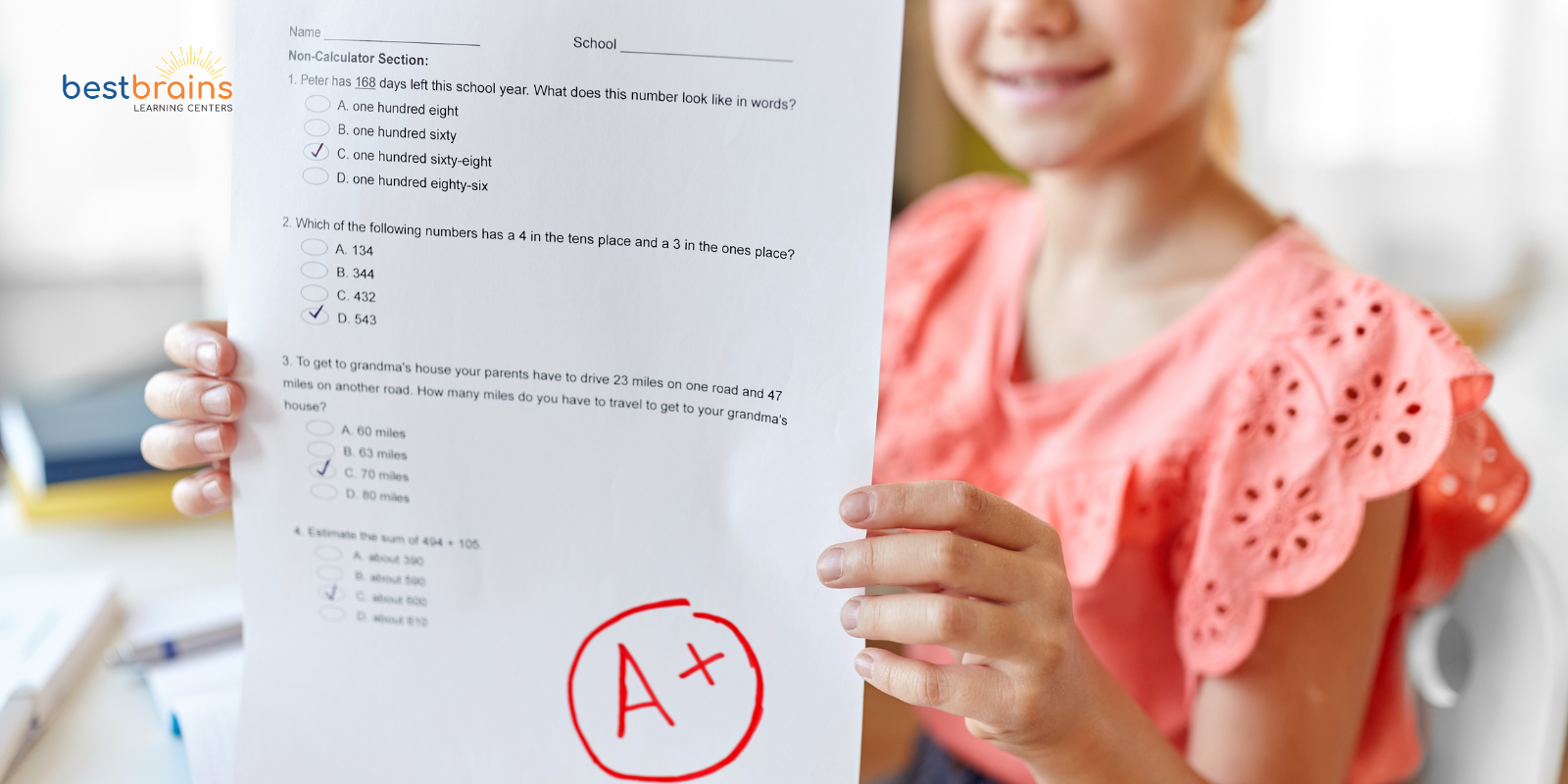
One of the biggest surprises for parents is discovering that intelligence alone doesn't guarantee academic success.
A child may fully understand a math lesson but still forget to turn in the homework.
Another student may read well above grade level but consistently lose assignments or procrastinate until the night before a project is due.
These aren't always signs that a child lacks ability.
Sometimes they simply need stronger executive functioning skills.
That's why two equally bright students can have very different experiences in school.
One stays organized, plans ahead, and finishes assignments consistently.
The other feels overwhelmed, forgets important details, and struggles to keep up—even though they are equally capable.
The Executive Function Skills Students Use Every Day
Executive function includes several interconnected abilities that help students navigate school successfully.
Working Memory
Working memory allows students to hold information in their minds while using it.
For example:
- Solving a multi-step math problem
- Remembering instructions while completing an activity
- Connecting ideas while reading a story
Strong working memory makes learning more efficient because students don't have to constantly stop and ask for directions again.
Attention and Focus
Every classroom is full of distractions.
Executive function helps students stay focused on the task in front of them, shift attention appropriately, and return to work after interruptions.
Learning to sustain attention is a skill that develops gradually with practice.
Organization
Organization is much more than having a tidy backpack.
Students need systems for:
- Keeping track of assignments
- Managing school materials
- Planning long-term projects
- Prioritizing responsibilities
Good organization reduces stress and allows students to spend more energy learning instead of searching for missing papers.
Self-Control
Executive function helps children pause before acting.
It allows students to:
- Wait their turn
- Think before speaking
- Manage frustration
- Stay engaged even when work feels challenging
These skills support both academic learning and healthy classroom relationships.
Flexible Thinking
School constantly asks students to adapt.
Sometimes the first strategy doesn't work.
Sometimes a teacher explains a concept in a new way.
Students with strong cognitive flexibility are more willing to adjust their thinking, consider different perspectives, and try another approach instead of giving up.
Why Executive Function Matters More Every Year
In kindergarten, teachers often guide students through every step of the day.
By middle school, much more responsibility shifts to the student.
Assignments come from multiple teachers.
Projects span several weeks.
Deadlines overlap.
Students are expected to manage their own materials, plan ahead, and balance increasing academic demands.
Without strong executive functioning skills, even capable students can begin feeling overwhelmed.
That's one reason why families sometimes notice a dramatic change in performance during the transition to middle school. The work isn't always significantly harder—the expectations for independence are.
How Parents Can Strengthen Executive Function at Home
The good news is that executive function develops through everyday experiences.
Parents can support these skills by encouraging children to take increasing responsibility over time.
Some simple strategies include:
- Establish consistent homework routines.
- Use checklists for morning and evening responsibilities.
- Encourage children to pack their own backpacks.
- Break large projects into smaller steps.
- Ask guiding questions instead of immediately solving problems.
- Allow natural consequences when appropriate so children learn from mistakes.
- Celebrate progress toward independence, not just perfect results.
The goal isn't to do more for children.
It's to gradually help them learn how to do more for themselves.
How Best Brains Helps Build Executive Function
At Best Brains, students certainly strengthen academic skills like math and reading.
But something equally valuable is happening behind the scenes.
As students complete structured daily practice, they also develop habits that strengthen executive functioning.
They learn to:
- Follow consistent routines.
- Manage increasingly challenging work.
- Solve problems independently.
- Persist when concepts become difficult.
- Think critically rather than guess.
- Build confidence through preparation and practice.
These habits don't just improve today's homework assignment.
They prepare students for greater independence in middle school, high school, college, and beyond.
Final Thoughts
Parents often ask what separates successful students from everyone else.
It's tempting to assume the answer is intelligence.
Research suggests something more encouraging.
Academic success is influenced not only by what students know, but by how they manage themselves while learning.
Executive function is the set of skills that helps children stay organized, focused, resilient, and prepared for increasingly complex challenges.
Like reading and math, these skills can be developed over time.
By strengthening executive function early, parents aren't simply helping their children earn better grades this year.
They're helping them build habits that will support learning, work, and life for years to come.
References & Further Reading
Center on the Developing Child at Harvard University. Executive Function & Self-Regulation. https://developingchild.harvard.edu
Diamond, A. (2013). Executive Functions. Annual Review of Psychology, 64, 135–168.
Center for Parent Information and Resources. Executive Function Fact Sheet.
Dawson, P., & Guare, R. (2018). Smart but Scattered. Guilford Press.
Willingham, D. T. (2009). Why Don't Students Like School? Jossey-Bass.