McKinney - North
Learn how early math foundations and abacus learning help McKinney North children build confidence, numeracy, and future STAAR readiness.
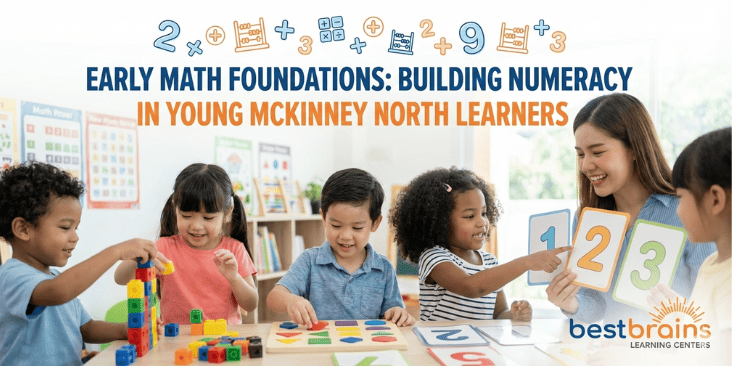
For parents in McKinney North, preparing children for academic success starts much earlier than most people realize. Long before STAAR testing begins in Grade 3, children develop the numeracy skills that determine how confidently they approach math, problem-solving, and logical reasoning throughout their school years.
Early math education-especially from preschool through Grade 2-lays the groundwork for everything that follows: addition and subtraction, word problems, multi-step reasoning, and eventually STAAR-style assessments. When children build a strong relationship with numbers early, math becomes less intimidating and far more intuitive.
This is why effective STAAR test prep truly begins years before the test itself. Strong early numeracy skills make future STAAR math concepts easier to understand, reduce test anxiety, and help students focus on problem-solving rather than struggling with basic calculations.
At Best Brains McKinney North, early math programs are intentionally designed to strengthen these foundations using proven methods such as abacus-based learning and structured concept-building. This approach helps young learners in McKinney North gain confidence, clarity, and long-term academic readiness.
This comprehensive guide explains why early math foundations matter, how preschool and K–2 activities support future STAAR success, and why starting early is one of the smartest educational investments McKinney North parents can make.
Why Early Math Foundations Matter More Than Ever
Many parents assume math readiness begins once children enter elementary school. In reality, numeracy development begins years earlier. Skills such as counting, recognizing quantities, understanding order, and identifying patterns start forming as early as age three.
Children who develop strong early math skills are more likely to:
-
Understand numbers conceptually rather than memorizing procedures
-
Develop logical and analytical thinking
-
Solve problems independently and confidently
-
Transition smoothly into elementary math curriculum
-
Perform better in standardized assessments like STAAR
Without a strong foundation, small gaps in understanding can grow larger over time. A child who struggles with basic number sense in kindergarten may later find multi-step word problems overwhelming in Grades 3–5.
For McKinney North families, early math preparation ensures children enter school prepared-not pressured.
What Are Early Math Foundations?
Early math foundations refer to the core numeracy skills children develop before formal testing begins. These skills go beyond worksheets and include understanding how numbers work in real life.
Key Early Math Concepts (Preschool-Grade 2)
1. Number Sense
Number sense is the ability to understand what numbers represent.
-
Counting objects accurately
-
Recognizing numerals
-
Comparing quantities (more, less, equal)
-
Understanding place value basics
Strong number sense is essential for future STAAR math questions that test reasoning rather than memorization.
2. Basic Operations (Addition & Subtraction)
Young learners begin to understand how numbers combine and separate.
-
Adding small numbers using objects or visuals
-
Subtracting through real-life examples
-
Understanding “how many left” or “how many more”
These concepts form the backbone of later multi-step math problems.
3. Patterns & Sequences
Recognizing patterns builds logical thinking.
-
Identifying repeating sequences
-
Understanding order and progression
-
Predicting what comes next
Pattern recognition is a key cognitive skill that supports algebraic thinking later on.
4. Spatial Awareness & Visualization
Children learn to visualize numbers and relationships.
-
Grouping objects
-
Understanding size and order
-
Visualizing quantities mentally
This skill is especially important for mental math and word problems.
How Abacus Learning Strengthens Early Numeracy
One of the most effective tools for building strong arithmetic foundations is the abacus. Unlike traditional worksheets, the abacus allows children to see and manipulate numbers, turning abstract concepts into concrete understanding.
Why the Abacus Works for Young Learners
-
Visual Learning: Children physically move beads, helping them understand quantities and place value
-
Hands-On Engagement: Learning becomes active, not passive
-
Mental Math Development: Over time, children visualize the abacus mentally, improving calculation speed
-
Improved Focus & Memory: Abacus practice strengthens concentration and working memory
Children exposed to abacus-based learning often develop faster and more accurate calculation skills, which directly support timed assessments like STAAR.
At Best Brains McKinney North, abacus instruction is introduced gradually and age-appropriately, ensuring children develop confidence without stress or pressure.
Baby Genius Math: Building Confidence from the Start
For preschoolers and early elementary students, Baby Genius Math focuses on developing numeracy in a structured yet engaging way. The program emphasizes:
-
Conceptual understanding over rote memorization
-
Visual representation of numbers
-
Step-by-step skill progression
-
Logical reasoning and pattern recognition
Children don’t just learn what the answer is-they learn why it works. This deep understanding reduces frustration and builds long-term confidence.
By the time students transition into elementary grades, they are already comfortable with numbers, operations, and logical thinking-skills essential for academic success in McKinney North schools.
How Early Math Foundations Support Future STAAR Success
Although STAAR testing officially begins in Grade 3, the skills assessed are built years earlier.
Strong early math preparation helps children:
-
Read and interpret math word problems accurately
-
Apply logic instead of guessing
-
Break down multi-step questions
-
Manage time effectively during exams
-
Stay calm and focused under pressure
Students who grow up confident with numbers approach STAAR assessments with familiarity rather than fear. Early preparation reduces anxiety and builds resilience-two critical factors in test performance.
Common Math Challenges Without Early Foundations
Without structured early math support, children may experience:
-
Difficulty understanding word problems
-
Math anxiety and lack of confidence
-
Slower calculation speed
-
Gaps in number sense and place value
-
Frustration during timed tests
Addressing these challenges early-before they impact self-esteem-makes a significant difference in long-term learning outcomes.
Simple At-Home Math Activities for McKinney North Parents
Parents play a powerful role in reinforcing numeracy outside the classroom. Everyday activities can strengthen math skills naturally.
Easy Ideas You Can Try at Home
-
Count groceries, toys, or steps while walking
-
Ask your child to measure ingredients while cooking
-
Play board games that involve numbers or counting
-
Practice mental math during car rides
-
Compare prices or quantities while shopping
These activities help children see math as a part of everyday life-not just a school subject.
Why McKinney North Parents Choose Best Brains for Early Math
Parents in McKinney North choose Best Brains because the programs are:
-
Structured: Clear progression from preschool through Grade 2
-
Proven: Abacus-based methods with measurable results
-
Balanced: Focus on understanding, speed, and confidence
-
Personalized: Small group instruction with individual attention
Best Brains doesn’t rush children ahead. Instead, it ensures they master foundational skills that support long-term academic growth and STAAR readiness.
Building a Lifelong Positive Relationship with Math
Early math education isn’t just about test preparation-it’s about shaping how children feel about learning. When children understand math conceptually and experience success early, they:
-
Develop confidence
-
Enjoy problem-solving
-
Become independent learners
-
Approach challenges with curiosity instead of fear
This positive mindset carries forward into elementary school, STAAR testing years, and beyond.
Final Thoughts
Strong early math foundations are one of the greatest academic gifts parents can give their children. By focusing on numeracy, number sense, and hands-on learning methods like the abacus, McKinney North families can set their children up for lasting success.
Starting early means fewer struggles later. With the right foundation, children don’t just prepare for STAAR-they prepare for a lifetime of confident learning.
If you’re looking for a proven early math program in McKinney North, Best Brains offers structured courses designed to help young learners thrive today and succeed tomorrow.
Frequently Asked Questions (FAQs)
1. What are early math foundations?
Early math foundations are the basic numeracy skills children develop in preschool through Grade 2. These include counting, number recognition, simple addition and subtraction, patterns, and logical thinking, which form the base for future math learning.
2. Why are early math skills important for young children?
Early math skills help children understand numbers conceptually, build confidence, and develop problem-solving abilities. Children with strong early numeracy perform better in elementary school and are better prepared for future assessments like STAAR.
3. At what age should my child start learning math concepts?
Children can begin learning basic math concepts as early as age 3. Preschool and kindergarten are ideal times to build number sense, counting skills, and early logical thinking in a stress-free way.
4. How does abacus learning help young children?
Abacus learning helps children visualize numbers and calculations. It improves number sense, mental math speed, focus, memory, and accuracy, making math easier and more enjoyable for young learners.
5. Is abacus suitable for preschool and kindergarten students?
Yes. Abacus instruction at an early age is introduced gradually and age-appropriately. It helps young children understand quantities and number relationships before moving to more advanced math concepts.
6. How does early math preparation help with STAAR success later?
STAAR math tests reasoning, problem-solving, and number fluency. These skills are built years earlier through strong early math foundations, helping children approach STAAR test with confidence rather than anxiety.
7. What is Baby Genius Math?
Baby Genius Math is an early learning program designed to build strong numeracy skills through hands-on activities, visual learning, and structured concept development for preschool and early elementary students.