McKinney - North
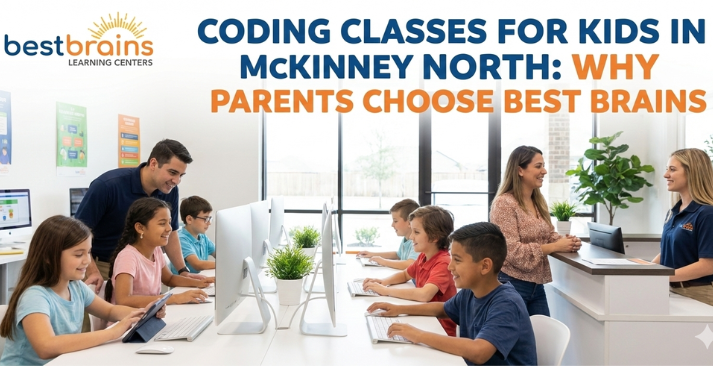
Coding Classes for Kids in McKinney North: Why Parents Choose Best Brains
Education today is evolving far beyond textbooks and exams. Families are increasingly looking for programs that help children think independently, solve problems confidently, and stay prepared for a future shaped by technology. One clear shift in recent years is the growing interest in coding classes for kids.
Coding is no longer viewed as a niche skill meant only for future engineers. Instead, it’s now recognized as a powerful learning tool that strengthens logic, creativity, and problem-solving - skills that benefit children across all subjects and grade levels. This is why coding has become a popular and meaningful after-school choice for many families in the McKinney North area.
Why Coding Classes Matter for Kids Today
One of the biggest misconceptions about coding is that it’s only about computers. In reality, coding teaches children how to think, not just how to use technology.
Through coding, kids learn to:
-
Break problems into smaller, manageable steps
-
Recognize patterns and sequences
-
Think logically and predict outcomes
-
Debug mistakes and try again
These habits of mind directly support learning in math, reading comprehension, and even science. Children begin to approach challenges more calmly and methodically, both in school and in everyday situations.
Academic Benefits of Coding Classes for Kids
Coding supports academic growth in ways that are often immediately noticeable.
Coding and Math Development
Coding naturally strengthens:
-
Logical reasoning
-
Number patterns
-
Step-by-step problem solving
These skills are essential for math success, especially when dealing with multi-step word problems. Many students become more confident tackling math assignments after gaining experience with coding-based logic.
Coding and Reading Skills
Coding also reinforces reading comprehension. Children must carefully read instructions, understand rules, and follow logical sequences. This improves:
-
Focus and attention to detail
-
Comprehension accuracy
-
Ability to interpret and apply information
These skills are especially helpful for classroom learning and standardized assessments.
Preparing Kids for a Technology-Driven World
Technology influences nearly every industry today, from healthcare and finance to design and education. Coding classes help children understand how technology works, rather than simply using it.
Learning coding encourages kids to:
-
Become creators instead of passive users
-
Understand how games, apps, and websites are built
-
Feel confident exploring new digital tools
Even for children who don’t plan to pursue technical careers, this foundation builds adaptability and digital confidence that will remain valuable throughout life.
Coding provides something many children struggle to find in school: a safe space to make mistakes.
In coding, errors are expected. Kids learn that:
-
Mistakes are part of learning
-
Problems can be fixed with patience
-
Persistence leads to success
Completing a coding task or solving a challenge gives children a strong sense of achievement. That confidence often transfers into classroom participation, homework completion, and overall self-belief.
Where Creativity Meets Logic
Another reason coding appeals to so many families is its balance of structure and creativity.
Coding allows children to:
-
Create simple games and animations
-
Design interactive stories
-
Solve problems in multiple ways
This blend works well for students with different learning styles. Children who may not thrive in traditional classroom settings often find coding engaging and motivating because it allows them to build, explore, and experiment.
A Productive After-School Learning Choice
After-school time is valuable, and many families want activities that are both enriching and productive. Coding classes turn screen time into active learning time.
Instead of passive consumption, children:
-
Think critically
-
Appply logic
-
Build real solutions
Structured coding programs also provide routine, consistency, and a focused learning environment, making them an excellent complement to school education.
The Value of In-Person Coding Classes
While online coding apps exist, in-person instruction plays an important role - especially for younger learners.
In-person coding classes offer:
-
Immediate guidance from trained instructors
-
Clear explanations when concepts feel confusing
-
Structured progression rather than random lessons
-
Interaction with peers that encourages collaboration
This guided approach ensures children build strong foundations and stay motivated.
Age-Appropriate Learning Matters
Well-designed coding programs grow with the child.
Younger learners focus on:
-
Sequencing and logic games
-
Visual problem-solving
-
Basic computational thinking
As children grow, they gradually move into:
-
More complex logic
-
Advanced problem-solving
-
Structured thinking models
This progression keeps learning challenging without becoming overwhelming.
Coding at Best Brains McKinney North
Best Brains McKinney North integrates coding as part of a broader academic enrichment program that also includes Math, English, and Abacus.
The coding curriculum is designed to:
-
Strengthen logical and analytical thinking
-
Encourage creativity and independent problem-solving
-
Support performance in core academic subjects
-
Be taught by certified teachers in a structured, supportive setting
Rather than focusing on memorization, the program emphasizes understanding, reasoning, and application - skills that benefit students well beyond coding itself.
Supporting Advanced and Curious Learners
Coding is also a valuable option for students who need more intellectual stimulation. It introduces higher-order thinking and complex challenges that keep curious minds engaged.
For students exploring advanced academic paths, coding supports reasoning, adaptability, and analytical depth.
Skills That Last a Lifetime
While grades and tests are important, long-term success depends on skills like:
-
Independent thinking
-
Resilience
-
Problem-solving confidence
Coding helps children develop these qualities early, setting them up for success in school and beyond.
Conclusion
Coding classes have become a meaningful educational choice because they go far beyond technology. They build confidence, strengthen academic skills, encourage creativity, and prepare children for a future shaped by innovation.
With structured instruction, certified educators, and a focus on thinking skills, coding programs offer lasting value. For families looking to give their children an edge, not just in school, but in life - coding is proving to be a smart and forward-thinking investment.
Frequently Asked Questions (FAQs)
1. What age is best to start coding classes for kids?
Children can start learning basic coding concepts as early as ages 5-6 through logic games, sequencing, and visual problem-solving. As they grow older, coding gradually becomes more structured and advanced. Starting early helps build strong thinking and reasoning skills.
2. Do kids need prior computer knowledge to join coding classes?
No prior experience is required. Coding programs are designed to start from the basics and progress step by step. Children learn foundational logic first, making it easy for beginners to feel comfortable and confident.
3. How do coding classes help with school performance?
Coding improves logical thinking, problem-solving, focus, and attention to detail. These skills directly support subjects like math, reading comprehension, and science, helping children approach schoolwork more confidently.
4. Is coding only useful for kids who want a tech career?
Not at all. Coding builds transferable skills such as analytical thinking, creativity, and persistence. These skills are valuable in any career path, whether a child chooses science, business, arts, or another field.
5. How are in-person coding classes different from online apps?
person coding classes provide structured lessons, real-time teacher guidance, and immediate feedback. This helps children understand concepts correctly, ask questions freely, and stay motivated - benefits that self-paced apps often lack.
6. How much screen time do coding classes involve?
Coding classes focus on purposeful screen use, where children actively think, solve problems, and create. This is very different from passive screen time like watching videos or playing games and is generally more productive and educational.
7. Can coding help children who struggle with confidence?
Yes. Coding encourages trial and error in a supportive environment. As children solve challenges and complete projects, they gain confidence in their ability to learn and overcome difficulties, which often carries over into school and daily life.
8. How often should kids attend coding classes?
Most children benefit from one structured coding session per week, along with optional practice at home. Consistency matters more than long or frequent sessions.
9. Does coding support gifted or advanced learners?
Yes. Coding offers advanced learners opportunities to tackle complex problems, think creatively, and stay intellectually challenged. It’s a great way to keep curious minds engaged.
10. Where can my child learn coding in a structured environment?
Programs like those offered at Best Brains McKinney North integrate coding with core academic enrichment, focusing on logic, reasoning, and confidence-building through guided instruction.