Morrisville

Why Reading Comprehension Is the Hidden Key to Academic Success | Best Brains Morrisville
Why Reading Comprehension Is the Hidden Key to Academic Success for Kids in Morrisville
When Morrisville parents think about academic support for their children, math tutoring and test preparation are usually the first things that come to mind. Science enrichment, coding classes, and CogAT prep follow closely behind. Yet the one skill that quietly shapes how well a child performs across every single subject — from science quizzes to math word problems to end-of-grade assessments — rarely makes it to the top of that list.
Reading comprehension.
Not reading speed. Not the ability to sound out words on a page. True, deep comprehension — the kind that allows a child to process what they have read, extract meaning from it, and apply that understanding to questions, problems, and new situations.
At Best Brains Learning Center of Morrisville, we have watched this pattern play out with students across Western Wake County year after year. The children who accelerate academically, who handle new subjects with ease and approach difficult tests without fear, are almost always the ones who have developed strong reading comprehension skills. And the children who struggle — even the bright, motivated ones — frequently share one common thread: their comprehension skills were never given the focused attention they needed.
If your child is a student in Morrisville, this is something worth understanding deeply.
Two Skills Parents Often Confuse — And Why It Matters
Picture a child sitting down with a book. They move through it quickly, reading every word aloud without stumbling, finishing the chapter in what seems like record time. Many parents see this and feel reassured — their child is a good reader.
But ask that same child what the chapter was about, what motivated the main character, or what the author was trying to communicate — and you may be met with a blank stare or a very surface-level answer.
This is the gap between reading fluency and reading comprehension, and it is far more common in classrooms across Morrisville and Wake County than most parents realize.
Fluency is the mechanical side of reading — the ability to decode words, read at an appropriate pace, and move through text smoothly. Comprehension is the cognitive side — the ability to understand, analyze, interpret, and retain what has been read. A child can be highly fluent and still struggle significantly with comprehension.
The gap matters enormously because schools and standardized tests do not reward fluency — they reward understanding. Every question on every assessment your child will ever take requires them to comprehend what they are reading before they can even begin to answer it correctly.
The Subject No One Expects Reading to Affect — But It Does
Ask most parents which subject reading comprehension affects most, and the answer is almost always English or language arts. The truth, however, is far broader than that — and understanding this changes how you think about your child's overall academic development.
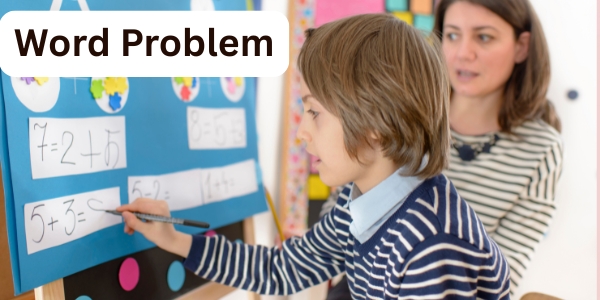
Mathematics: The shift from basic arithmetic to word problems is one of the biggest stumbling blocks for elementary and middle school students. A child who cannot read a problem carefully, identify what is being asked, and separate relevant from irrelevant information will consistently make errors — not because they lack math ability, but because comprehension is breaking down before the math even begins.
Science: Every science unit involves reading — textbook passages, experiment instructions, data interpretation questions, and test items that require students to draw conclusions from what they have read. Weak comprehension turns science from an exciting subject into an exercise in guesswork.
Social Studies: Analyzing historical events, interpreting maps and timelines, and understanding cause-and-effect relationships across different time periods all demand the ability to read critically and think about meaning — skills that rest entirely on a strong comprehension foundation.
Standardized Testing: The NC Check-Ins, end-of-grade assessments, and gifted program evaluations used throughout Wake County are comprehension-heavy by design. A child who misreads a question — even slightly — will miss the answer regardless of how thoroughly they studied the material.
The implication is significant: when you invest in your child's reading comprehension, you are not improving one subject. You are improving all of them simultaneously.
Why Morrisville Raises the Academic Bar Higher Than Most
There is a reason Morrisville families are among the most education-focused in North Carolina. This is a community built around high-achieving professionals, academically driven households, and schools that consistently rank at the top of state performance metrics.
Inside that environment, the expectations placed on students — both formally through school curricula and informally through the culture of the community — are genuinely high. Students are not just expected to pass. They are expected to excel, to compete for gifted program placement, and to enter each new grade level already ahead of where most of their peers are starting.
In a community like this, surface-level academic skills are not enough. A child who reads adequately will find themselves consistently outpaced by classmates who read deeply. A student who comprehends just enough to get by will struggle when the material complexity increases — which it does, dramatically, between third and fifth grade, and again between fifth and seventh.
The families in Morrisville who are investing in their children's reading comprehension now are not doing it because their children are struggling. Many are doing it precisely because they want to stay ahead — to ensure that when the academic demands increase, their child is already equipped to handle them with confidence.
The Warning Signs Are Easy to Miss
Reading comprehension struggles do not always announce themselves loudly. Unlike a child who cannot decode words or refuses to read aloud, a child with comprehension difficulties can appear perfectly capable — right up until the point where they are not.
These are the patterns that experienced educators at Best Brains Morrisville see most often:
Retelling falls flat. Finish a book chapter together and ask your child to tell you what just happened. If the summary is vague, incomplete, or focused on minor details rather than the main events, comprehension is not where it needs to be.
Test performance does not match effort. Your child studied. They knew the material during your review at home. But the test grade does not reflect that preparation. This disconnect is one of the most reliable indicators that comprehension of the test questions themselves is breaking down.
Inferential questions create confusion. Many students handle literal questions well — the answers are right there on the page. But when a question asks them to draw a conclusion, identify an implied meaning, or predict what might happen next, they freeze or guess randomly.
Reading happens but retention does not. Your child reads for the required time but cannot tell you anything meaningful about what they read. The words went in, but the meaning did not stay.
Written assignments feel disproportionately hard. When a teacher explains concepts verbally, your child follows along well. When they have to independently read and process written material on their own, the work quality drops noticeably.
Any one of these patterns is worth paying attention to. Several of them together is a clear signal that targeted comprehension support would make a significant difference.
What It Looks Like When Comprehension Is Strong
The contrast, once a child develops genuine comprehension strength, is remarkable — and it shows up in places parents do not always expect.
A strong comprehender reads a passage once and walks away with a clear mental picture of the main idea, the supporting details, and the author's intent. They handle inference questions not with anxiety but with interest — treating them as puzzles rather than obstacles. They read math problems deliberately, identifying exactly what is being asked before they begin working, which eliminates the careless errors that come from misreading.
On tests, they read each question fully rather than scanning for keywords, which means they are answering what is actually being asked rather than what they assumed was being asked. This single habit alone accounts for a significant improvement in test scores for many students.
Perhaps the most visible change is the attitude shift. Children who understand what they read begin to enjoy reading. The reluctance disappears. The groaning when it is time to read disappears. In its place is a child who picks up books voluntarily — because reading has become rewarding rather than frustrating.
The Best Brains Morrisville Approach to Reading Comprehension
The English program at Best Brains Learning Center of Morrisville is built around developing comprehension at every level of depth — from foundational understanding of narrative and informational text in early elementary grades, through advanced literary analysis and critical reading in upper elementary and middle school.
Vocabulary as the Entry Point
A reader who encounters too many unfamiliar words in a passage loses the thread of meaning quickly. Our program builds vocabulary deliberately and systematically — not through memorizing word lists, but through contextual learning that teaches students how to derive meaning from surrounding text, recognize word roots and patterns, and apply new vocabulary in their own thinking and writing. This gives students the linguistic confidence to engage with challenging reading material without shutting down.
Teaching Students How to Read, Not Just That They Should
Many children have been told to read more carefully. Very few have been taught specifically what reading carefully looks like. Best Brains instructors teach active reading strategies — how to identify the main idea as you move through a passage, how to distinguish essential information from supporting detail, how to monitor your own comprehension in real time and recognize when understanding has broken down. These are not test tricks. They are genuine cognitive skills that become habits with practice.
From Literal to Inferential — Building the Full Range
The difference between a student who reads adequately and one who reads exceptionally well often comes down to inferential comprehension — the ability to understand what is implied rather than just what is stated. Our program systematically builds this skill through structured practice with increasingly complex passages, guided questioning, and discussion that pushes students beyond surface-level answers into genuine analysis.
Diverse Text Exposure
Fiction, nonfiction, biography, persuasive essays, poetry, and informational passages each demand a slightly different reading approach. Students who have only practiced comprehension with one type of text are consistently caught off guard by others. Best Brains Morrisville exposes students to the full range of genres they will encounter in school and on assessments — so nothing feels unfamiliar when it matters most.
Personal Attention Within Every Session
Our small class structure ensures that instructors do not just mark answers right or wrong — they observe how each student is processing what they read and provide targeted feedback that addresses the actual comprehension breakdown rather than just the surface symptom.
Reading Comprehension and Gifted Testing in Wake County
For Morrisville families with their sights set on Wake County gifted program placement or CogAT performance, the connection to reading comprehension is direct and significant.
The CogAT Verbal Battery assesses verbal reasoning, sentence completion, and verbal classification — all of which require a strong command of language and the ability to understand and manipulate meaning at a sophisticated level. Students who have developed deep comprehension skills through consistent structured practice are far better prepared for these assessments than those who have simply focused on test-taking strategies.
The distinction matters because gifted assessments are specifically designed to measure genuine cognitive ability — the kind that develops through real skill-building rather than short-term cramming. Reading comprehension development is one of the most direct investments a family can make toward strong gifted assessment performance.
An Investment That Pays Off for Years
The return on strong reading comprehension skills compounds over time in a way that few other academic investments do.
Students who enter middle school with strong comprehension abilities handle the dramatic increase in reading volume and complexity with considerably less stress than their peers. In high school, they tackle AP coursework, complex literature, and research-heavy assignments from a position of strength. On the SAT and ACT, where reading comprehension sections carry enormous weight, their preparation began years earlier — not with test prep courses, but with genuine skill development.
Beyond academics, the habits of mind that come with strong comprehension — careful attention, the ability to analyze and synthesize information, comfort with complexity — are among the most valued attributes in college and professional environments. When you build these skills in a child today, you are not just improving their performance this school year. You are shaping how they engage with information and ideas for the rest of their lives.
Take the First Step with a Free Assessment
Understanding where your child currently stands is the most important first step — and it does not have to be complicated.
Best Brains Learning Center of Morrisville offers a complimentary assessment that gives you a precise, honest picture of your child's reading comprehension level, where specific gaps exist, and how our structured English program can help them grow with confidence. No commitment is required — just clarity and a starting point.
Families across Morrisville, Cary, Apex, and the greater Western Wake County area have trusted Best Brains because our approach is built on genuine skill development, not surface-level fixes. We meet every child where they are and build from there — one concept, one strategy, one breakthrough at a time.
Because when your child truly understands what they read, everything else in their academic life becomes more manageable — and more possible.
📍 Best Brains Learning Center of Morrisville 📞 Contact us today to schedule your child's free reading comprehension assessment 🌐 Learn more about our English enrichment and reading program online
Questions Morrisville Parents Often Ask
Is reading comprehension support only for children who are behind? Not at all. Many of the students who benefit most from our program are already performing at or above grade level. Enriching comprehension skills pushes capable students further — into deeper analysis, stronger writing, and more competitive performance on gifted assessments and advanced coursework.
How does Best Brains differ from school reading instruction? School instruction is necessarily paced for an entire classroom. Our program provides the individualized attention and structured progression that allows each student to develop comprehension skills at their own optimal pace — filling gaps where they exist and accelerating where the foundation is already strong.
What grade levels does the program serve? Our English and reading comprehension program serves students from kindergarten through eighth grade, with curriculum and instruction calibrated to each student's current level and goals.
How quickly do students typically show progress? Most families notice meaningful improvement within two to three months of consistent attendance. The key is structured, regular practice with the kind of targeted feedback that only small-group, personalized instruction makes possible.
Best Brains Learning Center of Morrisville is proud to serve students and families across Morrisville, Cary, Apex, Research Triangle Park, and Western Wake County, NC.