Morrisville
Grade 3 Math Syllabus - Wake County
Grade 3 Math Curriculum: What Every Parent Should Know
As students enter Grade 3, mathematics takes a significant step forward. Children move beyond basic addition and subtraction and begin developing a deeper understanding of multiplication, division, fractions, geometry, measurement, and problem-solving. This is often considered a pivotal year because many of the mathematical concepts learned in Grade 3 become the foundation for future success in upper elementary and middle school math.
At Best Brains Learning Center - Morrisville, our Grade 3 Math program is designed to strengthen conceptual understanding while building confidence and critical thinking skills.
Key Topics Covered in Grade 3 Math
1. Multiplication and Division
Grade 3 students are introduced to multiplication and division as related operations. They learn to:
- Understand multiplication as repeated addition
- Use arrays and equal groups to represent multiplication
- Learn multiplication facts through 10 × 10
- Understand division as sharing and grouping
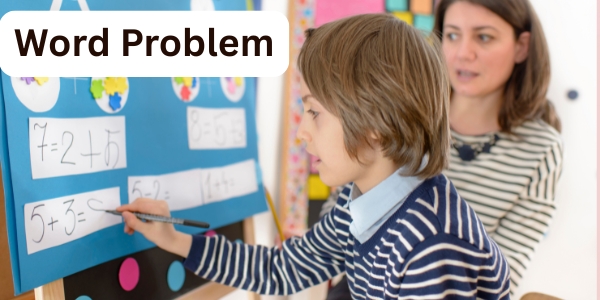
- Solve one-step and two-step word problems
- Recognize the relationship between multiplication and division
Developing fluency with multiplication and division facts is one of the most important goals of Grade 3 mathematics.
2. Place Value and Number Sense
Students expand their understanding of numbers and place value by:
- Reading and writing numbers up to 10,000
- Comparing and ordering numbers
- Understanding hundreds, tens, and ones
- Rounding numbers to the nearest ten and hundred
- Estimating answers to solve problems
Strong number sense helps students perform calculations more efficiently and accurately.
3. Addition and Subtraction Strategies
Third graders continue refining their addition and subtraction skills by:
- Solving multi-digit addition problems
- Solving multi-digit subtraction problems
- Using regrouping strategies
- Applying estimation techniques
- Solving real-world word problems
Students learn multiple methods and are encouraged to explain their mathematical thinking.
4. Introduction to Fractions
Fractions are introduced as equal parts of a whole. Students learn to:
- Identify fractions using visual models
- Understand unit fractions such as 1/2, 1/3, and 1/4
- Compare simple fractions
- Represent fractions on number lines
- Recognize equivalent fractions through models
Fractions become an important focus area that continues throughout elementary school.
5. Measurement and Data
Students develop practical measurement skills by learning to:
- Measure length using standard units
- Estimate and compare measurements
- Tell time to the nearest minute
- Solve elapsed time problems
- Work with money and make change
- Interpret bar graphs and picture graphs
These concepts help students connect mathematics to everyday life.
6. Geometry
Geometry helps students develop spatial reasoning and visualization skills. Topics include:
- Identifying and classifying shapes
- Understanding attributes of polygons
- Recognizing quadrilaterals
- Understanding area and perimeter
- Partitioning shapes into equal parts
Students begin exploring how shapes can be grouped and compared based on their properties.
7. Area and Perimeter
A major Grade 3 milestone is understanding area and perimeter.
Students learn to:
- Measure area using square units
- Find the area of rectangles
- Calculate perimeter by adding side lengths
- Solve real-world problems involving area and perimeter
These concepts lay the groundwork for future geometry studies.
Essential Skills Students Should Master by the End of Grade 3
By the end of Grade 3, students should be able to:
✓ Recall multiplication and division facts within 100
✓ Solve multi-step word problems
✓ Understand basic fractions
✓ Measure length, time, and money accurately
✓ Interpret graphs and data
✓ Calculate area and perimeter
✓ Explain mathematical reasoning using models and equations
These skills create the foundation for more advanced concepts introduced in Grade 4 and beyond.
Common Challenges for Grade 3 Students
Many students experience difficulty with:
- Memorizing multiplication facts
- Understanding the relationship between multiplication and division
- Visualizing fractions
- Solving multi-step word problems
- Distinguishing between area and perimeter
Consistent practice and guided instruction can help students overcome these challenges and build confidence.
How Parents Can Support Grade 3 Math Learning
Parents can reinforce learning at home by:
- Practicing multiplication facts daily
- Using flashcards and math games
- Encouraging mental math during everyday activities
- Working with money while shopping
- Measuring household objects
- Discussing fractions during meals and cooking
Making math part of everyday life helps children see its practical value.
How Best Brains Helps Grade 3 Students Succeed
At Best Brains Learning Center - Morrisville , our Grade 3 Math program combines conceptual learning, problem-solving, and skill development. Our worksheets and enrichment curriculum help students:
- Master multiplication and division
- Build strong number sense
- Develop confidence with fractions
- Improve problem-solving abilities
- Prepare for higher-level mathematics
Our experienced teachers provide individualized support to ensure every student progresses at the right pace while staying challenged and engaged.
Enroll Your Child in Grade 3 Math at Best Brains Learning Center - Morrisville
Grade 3 is one of the most important years in a child's mathematical journey. Building a strong foundation now can significantly impact future academic success.
If you're looking for a structured and engaging enrichment program that helps students excel in mathematics, contact your local Best Brains Learning Center today to learn more about our Grade 3 Math program.