Morrisville
Grade 2 Math Syllabus - Wake County
Grade 2 Math Curriculum: Building Strong Foundations for Future Success
Grade 2 is an exciting year for young learners as they strengthen their number sense and develop confidence in solving more complex mathematical problems. During this stage, students move beyond basic counting and simple arithmetic to work with larger numbers, place value concepts, measurement, geometry, and problem-solving strategies.
A strong understanding of Grade 2 math concepts prepares students for multiplication, division, fractions, and advanced problem-solving in later grades. At Best Brains Learning Center - Morrisville, our Grade 2 Math program focuses on developing both computational fluency and critical thinking skills through engaging enrichment activities.
Key Topics Covered in Grade 2 Math
1. Number Sense and Place Value
One of the most important Grade 2 concepts is understanding place value.
Students learn to:
- Read and write numbers up to 1,000
- Understand hundreds, tens, and ones
- Compare and order numbers
- Skip count by 2s, 5s, 10s, and 100s
- Identify odd and even numbers
- Recognize number patterns
Strong place value understanding helps students perform arithmetic operations more efficiently and accurately.
2. Addition and Subtraction Within 1,000
Grade 2 students continue developing fluency with addition and subtraction.
Topics include:
- Adding and subtracting two-digit and three-digit numbers
- Understanding regrouping (carrying and borrowing)
- Mental math strategies
- Estimating sums and differences
- Solving real-world word problems
- Explaining mathematical reasoning
Students learn multiple strategies to solve problems and develop flexibility in their thinking.
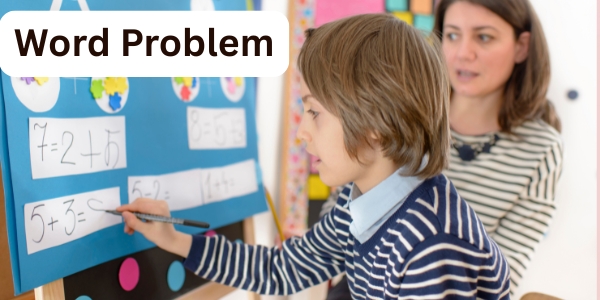
3. Word Problem Solving
Problem-solving becomes a larger focus in Grade 2.
Students learn to:
- Analyze mathematical situations
- Identify key information
- Choose appropriate operations
- Solve one-step and two-step word problems
- Explain their solutions using pictures, models, and equations
These skills help build logical reasoning and mathematical confidence.
4. Measurement
Measurement activities help students connect mathematics to everyday life.
Students learn to:
- Measure length using inches, feet, centimeters, and meters
- Compare lengths of objects
- Estimate measurements
- Use rulers and measuring tools
- Solve measurement-related word problems
Hands-on practice helps students understand practical applications of math.
5. Time and Money
Grade 2 students expand their understanding of time and money.
Topics include:
- Reading analog and digital clocks
- Telling time to the nearest five minutes
- Understanding AM and PM
- Counting coins and bills
- Solving money word problems
- Making change using simple transactions
These skills support financial literacy and daily life applications.
6. Data and Graphing
Students learn how to collect, organize, and interpret information.
They work with:
- Picture graphs
- Bar graphs
- Tally charts
- Surveys and data collection
- Comparing data sets
- Drawing conclusions from graphs
Data analysis helps students develop critical thinking and observation skills.
7. Geometry
Geometry introduces students to shapes and spatial reasoning.
Students learn to:
- Identify two-dimensional shapes
- Recognize three-dimensional figures
- Describe shape attributes
- Compare shapes
- Partition shapes into equal parts
- Understand simple fractions through shape models
Geometry strengthens visual and spatial thinking abilities.
8. Foundations of Fractions
Although fractions are explored more deeply in later grades, Grade 2 students begin learning:
- Equal parts of a whole
- Halves, thirds, and fourths
- Partitioning shapes
- Comparing equal shares
These early fraction concepts prepare students for future fraction operations.
Essential Skills Students Should Master by the End of Grade 2
By the end of Grade 2, students should be able to:
✓ Read, write, and compare numbers up to 1,000
✓ Add and subtract within 1,000 using efficient strategies
✓ Solve one-step and two-step word problems
✓ Tell time to the nearest five minutes
✓ Count money and solve money-related problems
✓ Interpret graphs and data
✓ Identify and describe geometric shapes
✓ Demonstrate strong place value understanding
These foundational skills help students transition successfully into Grade 3 mathematics.
Common Challenges for Grade 2 Students
Many students find the following concepts challenging:
- Regrouping during addition and subtraction
- Multi-step word problems
- Telling time accurately
- Counting mixed coins
- Understanding place value beyond 100
- Interpreting graphs and data
Regular practice and guided instruction help students build confidence and mastery.
How Parents Can Support Grade 2 Math Learning
Parents can encourage math learning at home by:
- Practicing addition and subtraction facts
- Counting money during shopping trips
- Reading clocks throughout the day
- Measuring household items
- Playing math-based games
- Looking for number patterns in everyday activities
Making math fun and practical helps reinforce classroom learning.
How Best Brains Helps Grade 2 Students Succeed
At Best Brains Learning Center - Morrisville, our Grade 2 Math program is designed to strengthen foundational skills while encouraging critical thinking and problem-solving.
Students benefit from:
- Structured enrichment curriculum
- Individualized attention
- Challenging yet engaging worksheets
- Development of logical reasoning skills
- Strong preparation for Grade 3 mathematics
Our experienced teachers help students build confidence while developing a lifelong appreciation for learning.
Enroll Your Child in Grade 2 Math at Best Brains
Grade 2 is a critical year for developing strong mathematical foundations. Students who gain confidence with place value, arithmetic, measurement, and problem-solving are better prepared for future academic success.
If you're looking for a comprehensive enrichment program that helps students excel in mathematics, contact your local Best Brains Learning Center - Morrisville today to learn more about our Grade 2 Math program.