Morrisville
Grade 8 Math Syllabus
Grade 8 Math Syllabus Guide for Parents
Everything Parents Should Know About 8th Grade Math
Grade 8 Math is one of the most important stages in a student’s academic journey. This is the year students transition from basic arithmetic into advanced algebraic thinking, problem-solving, and real-world mathematical applications.
Many students find Grade 8 Math more challenging because concepts become more abstract and require deeper analytical thinking. Understanding the Grade 8 Math syllabus helps parents better support their child and identify areas where additional practice may be needed.
At Best Brains Learning Centers, we focus on helping students build strong Math fundamentals, confidence, and problem-solving skills that prepare them for high school success.
Why Grade 8 Math Is Important
Grade 8 Math prepares students for:
- Algebra I
- High school mathematics
- Standardized testing
- Logical and analytical thinking
- Real-world problem solving
Students begin learning how numbers, variables, graphs, and equations connect together. Strong understanding at this stage makes future math courses significantly easier.
Major Topics in Grade 8 Math
1. Linear Equations
One of the biggest Grade 8 Math topics is solving and graphing linear equations.
Students learn:
- One-step and multi-step equations
- Variables and constants
- Slope and intercepts
- Writing equations from word problems
- Graphing lines on coordinate planes
A foundational equation students work with is:
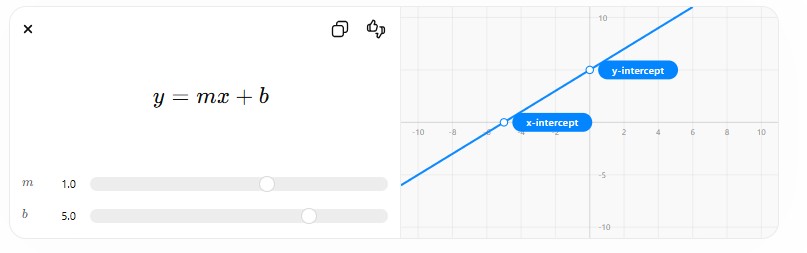
Where:
- m represents slope
- b represents the y-intercept
This concept teaches students how mathematical relationships can model real-life situations.
2. Functions
Students are introduced to functions, which become a major part of Algebra.
Topics include:
- Understanding input and output relationships
- Function tables
- Graphing functions
- Comparing functions
- Identifying patterns
Functions help students recognize relationships between quantities.
3. Systems of Equations
Students learn how to solve equations involving two variables.
For example:
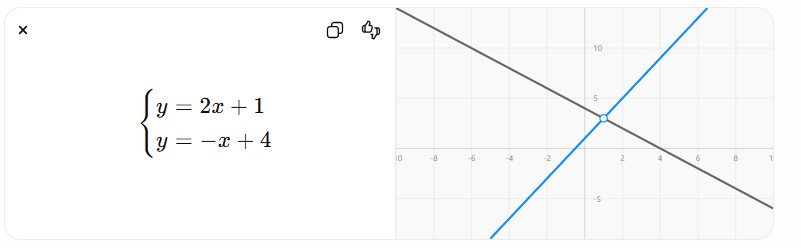
Methods include:
- Graphing
- Substitution
- Elimination
This develops advanced logical reasoning skills.
4. Geometry
Geometry becomes more advanced in Grade 8.
Students study:
- Angles
- Transformations
- Congruence
- Similarity
- Volume formulas
- Coordinate geometry
One major concept is the Pythagorean Theorem:
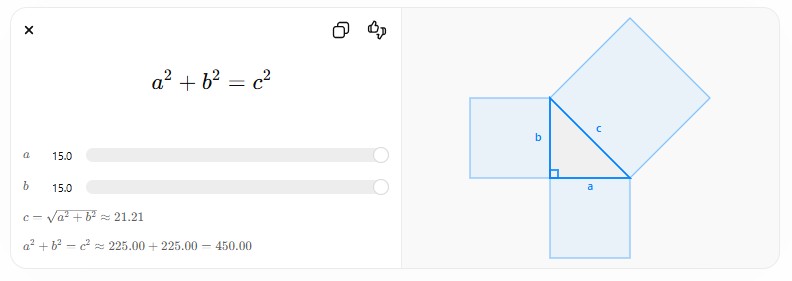
Students use this formula to solve problems involving right triangles and distance.
5. Exponents & Scientific Notation
Students work with:
- Integer exponents
- Powers of 10
- Scientific notation
- Very large and very small numbers
These concepts are important for science and future algebra courses.
6. Irrational Numbers
Grade 8 students begin understanding:
- Square roots
- Cube roots
- Rational vs irrational numbers
For example:
√2
Students learn that some numbers cannot be written as simple fractions.
7. Statistics & Probability
Students analyze and interpret data using:
- Scatter plots
- Trends
- Associations
- Probability concepts
- Two-way tables
These lessons help students develop critical thinking and data analysis skills.
Common Challenges Students Face in Grade 8 Math
Many students struggle with:
- Multi-step algebra problems
- Translating word problems into equations
- Graphing concepts
- Understanding variables
- Abstract reasoning
This is completely normal because Grade 8 introduces a more advanced level of thinking compared to earlier grades.
Signs Your Child May Need Extra Help
Parents should watch for:
- Homework frustration
- Avoiding math assignments
- Difficulty explaining concepts
- Falling grades
- Low confidence in problem-solving
Early support can prevent students from falling behind before entering high school math.
How Parents Can Help at Home
Encourage Daily Practice
Math improves through repetition and consistency.
Even 15–20 minutes of practice daily can strengthen:
- Accuracy
- Speed
- Confidence
Focus on Understanding, Not Memorization
Students should understand why formulas work, not just memorize steps.
Use Real-Life Examples
Help students connect math to:
- Shopping
- Cooking
- Sports statistics
- Budgeting
- Measurements
This makes concepts more meaningful.
Build Confidence
Positive encouragement plays a huge role in student success.
Avoid phrases like:
- “Math is hard”
- “I was never good at math”
Instead encourage effort, growth, and persistence.
How Enrichment Programs Support Grade 8 Math Success
Structured enrichment programs like Best Brains Learning Center Morrisville can help students:
- Strengthen foundational skills
- Improve problem-solving ability
- Stay ahead academically
- Build confidence in Algebra readiness
- Develop disciplined study habits
Consistent practice and guided instruction help students transition smoothly into high school math.
Final Thoughts
Grade 8 Math is a major stepping stone toward future academic success. Students develop algebraic thinking, analytical reasoning, and advanced problem-solving skills that will support them throughout high school and beyond.
With consistent support, practice, and encouragement, students can build confidence and achieve strong success in Math.
Parents who stay actively involved during this stage often see tremendous growth in both academic performance and student confidence.