Mechanicsburg
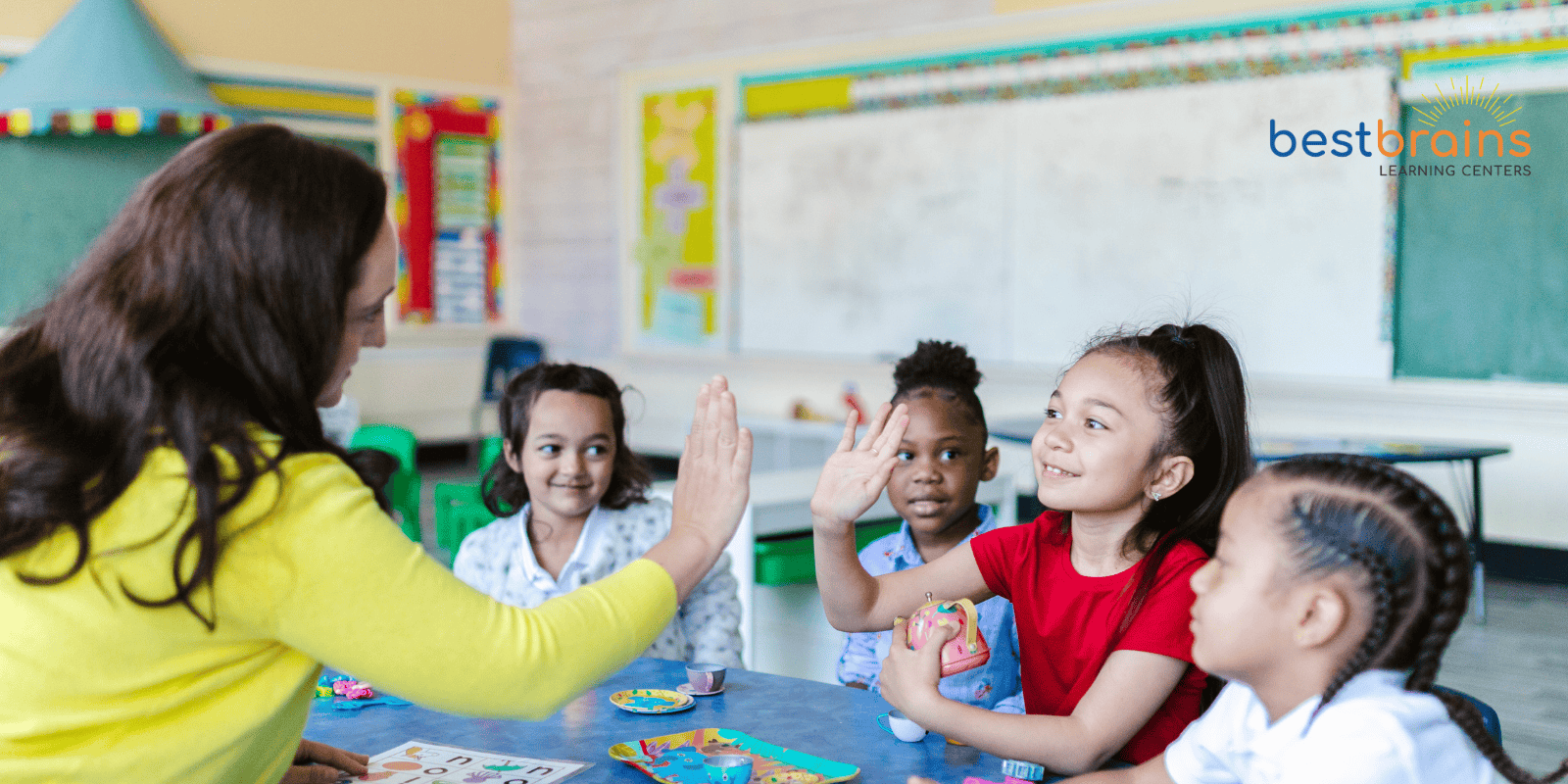
Brain Workouts for Young Minds: How Best Brains Strengthens Thinking Skills Daily
Brain Workouts for Young Minds: How Best Brains Strengthens Thinking Skills Daily
Children don’t build strong minds by cramming once or twice a week. They build strong minds through consistent, daily mental workouts.
At Best Brains Learning Center in Mechanicsburg, we don’t believe in occasional academic bursts. We believe in strengthening thinking skills every single day through structured exercises designed to build focus, reasoning, memory, and problem-solving ability.
Just like muscles grow with regular training, the brain grows with regular challenge. Here’s how our daily approach makes the difference.
1. Daily Practice Builds Mental Stamina
Many programs rely on 1–2 sessions per week. While that may feel manageable, it doesn’t create consistent cognitive growth.
Research shows that spaced, distributed practice leads to stronger retention and deeper understanding than infrequent, longer sessions (Cepeda et al., 2006).
Best Brains provides:
- Daily math and English exercises
- Short, structured learning segments
- Repetition with variation (not memorization)
- Gradual skill progression
This daily rhythm strengthens:
- Working memory
- Attention span
- Processing speed
- Academic endurance
Over time, students don’t just get better at math or reading — they become better thinkers.
2. Mental Math & Abacus Strengthen the Brain’s Processing Power
Our Abacus program is a true brain workout. When students learn mental math through abacus training, they engage multiple areas of the brain at once — visual processing, number sense, memory, and speed.
Studies suggest abacus training can improve:
- Calculation speed
- Working memory
- Concentration
- Visual-spatial skills
Instead of counting on fingers or guessing, students develop automatic number fluency. That frees up brainpower for higher-level problem solving.
3. Booklet-Based Learning Encourages Focus
In a world filled with screens and constant distractions, focus has become a skill that must be trained. Our booklet-based curriculum:
- Reduces digital distraction
- Encourages sustained attention
- Promotes deliberate practice
- Builds discipline and independence
Students learn to sit, think, and work through challenges. That’s a cognitive skill that transfers directly to school performance.
4. Critical Thinking Over Memorization
Best Brains does not teach through rote repetition alone. Our curriculum aligns with Common Core standards and emphasizes:
- Conceptual understanding
- Pattern recognition
- • Logical reasoning
- • Problem-solving strategies
When students understand why something works — not just what the answer is — their confidence and flexibility increase dramatically.
5. Small Daily Wins Build Confidence
Confidence isn’t built from occasional breakthroughs. It’s built from daily progress. When students complete manageable exercises each day, they experience:
- Clear growth
- Skill mastery
- Reduced anxiety
- Academic ownership
This steady momentum is what keeps students motivated long-term.
Why Daily Brain Workouts Matter More Than Weekly Classes
Imagine exercising only twice per week and expecting dramatic physical transformation. It doesn’t work that way. The brain works the same way. Consistency creates:
- Neural strengthening
- Faster recall
- Greater accuracy
- Long-term retention
At Best Brains, daily exercises reinforce skills between classes so students are constantly sharpening their minds — not starting over each week.
The Long-Term Impact
Students who build daily academic habits often:
- Struggle less with homework
- Retain skills longer
- Transition more smoothly between grade levels
- Develop stronger executive functioning skills
In short, they become independent learners. And that’s our goal.
Ready to Strengthen Your Child’s Mind?
If your child attends enrichment programs only once or twice a week and you’re not seeing steady growth, it may be time for a different approach.
At Best Brains Learning Center in Mechanicsburg, we provide structured daily brain workouts that build lasting academic strength.
Schedule a free assessment today and see the difference daily learning makes.
References & Further Reading
- Cepeda, N. J., Pashler, H., Vul, E., Wixted, J. T., & Rohrer, D. (2006). Distributed practice in verbal recall tasks: A review and quantitative synthesis. Psychological Bulletin, 132(3), 354–380.
- Dehaene, S. (2011). The Number Sense: How the Mind Creates Mathematics. Oxford University Press.
- Gathercole, S. E., & Alloway, T. P. (2008). Working Memory and Learning. Sage Publications.
- National Mathematics Advisory Panel. (2008). Foundations for Success: The Final Report of the National Mathematics Advisory Panel.
- Willingham, D. T. (2009). Why Don’t Students Like School? Jossey-Bass.