Abbotsford

Is My Child Ready for Kindergarten in Abbotsford? The Complete 2026 Checklist for Fraser Valley Parents
The moment it hits you is different for every parent. For some it is during registration in January. For others it is a quiet Tuesday in June when they realise September is twelve weeks away and their four-year-old still cannot write their own name. For many Abbotsford parents it is 10:00 PM on a Sunday night, phone in hand, typing "is my child ready for kindergarten" into Google — hoping for a checklist that tells them everything is going to be fine.
This is that guide. And yes — things are going to be fine. But there are a few things worth knowing before that first September morning arrives.
First, the Most Important Thing Abbotsford Parents Get Wrong
Most parents assume kindergarten readiness is primarily about academics. Can my child count to 20? Do they know their ABCs? Can they write their name?
These things matter — but they are not what kindergarten teachers in Abbotsford are most concerned about on Day One.
The Abbotsford School District's own approach to gradual entry is clear: the transition to kindergarten is about the whole child — their social confidence, their ability to follow instructions, their emotional regulation, and their readiness to be part of a group — not just their letter recognition. Academic skills are teachable in the classroom. A child who cannot manage their emotions, separate from a parent, or sit still for a story is significantly harder to support in a class of 20 others.
This does not mean academics do not matter. They absolutely do — and we will get to that. But the parent who has spent six months drilling flashcards while neglecting routines, independence, and social play has prepared their child for the wrong test.
The Abbotsford Kindergarten Readiness Checklist — 2026
Use this checklist in the months leading up to September. Do not panic if your child is not ticking every box — development is not a race, and kindergarten teachers are trained to meet children where they are. Use it as a guide to identify where a little extra support would make the biggest difference.
✅ Social and Emotional Readiness
These are the skills that will shape your child's first weeks of school more than any academic ability.
- Can separate from you without prolonged distress
- Can take turns and share with other children
- Can express basic emotions using words ("I am frustrated," "I feel sad")
- Can recover from minor disappointments without extended meltdowns
- Shows interest in playing with other children
- Can follow a simple two-step instruction ("Put your shoes on and sit by the door")
- Understands that there are rules and that rules apply to everyone
What to practice: Playdates, group activities, library storytime, and community sports are the best preparation for this dimension. Role-play scenarios your child might encounter — saying goodbye at drop-off, asking a teacher for help, resolving a disagreement over a toy.
✅ Language and Communication Readiness
- Can speak in complete sentences that adults outside the family can understand
- Can tell a simple story or recount a recent event in sequence
- Can answer questions about a short story that was read to them
- Knows their first and last name and can say it clearly
- Can ask for help using words
- Has an age-appropriate vocabulary and is curious about new words
What to practice: Read together every day and ask questions about what happened and why. Have real conversations — not just instructions. Let your child narrate what they are doing during play. Exposure to a wide range of vocabulary through books, audiobooks, and conversation is one of the single highest-impact things a parent can do before September.
✅ Early Math Readiness
- Can count to 10 with one-to-one correspondence (pointing to each object as they count)
- Understands basic concepts of more and less
- Can sort objects by colour, shape, or size
- Recognises basic shapes — circle, square, triangle, rectangle
- Understands concepts of before and after, first and last
- Can identify and extend a simple pattern (red, blue, red, blue — what comes next?)
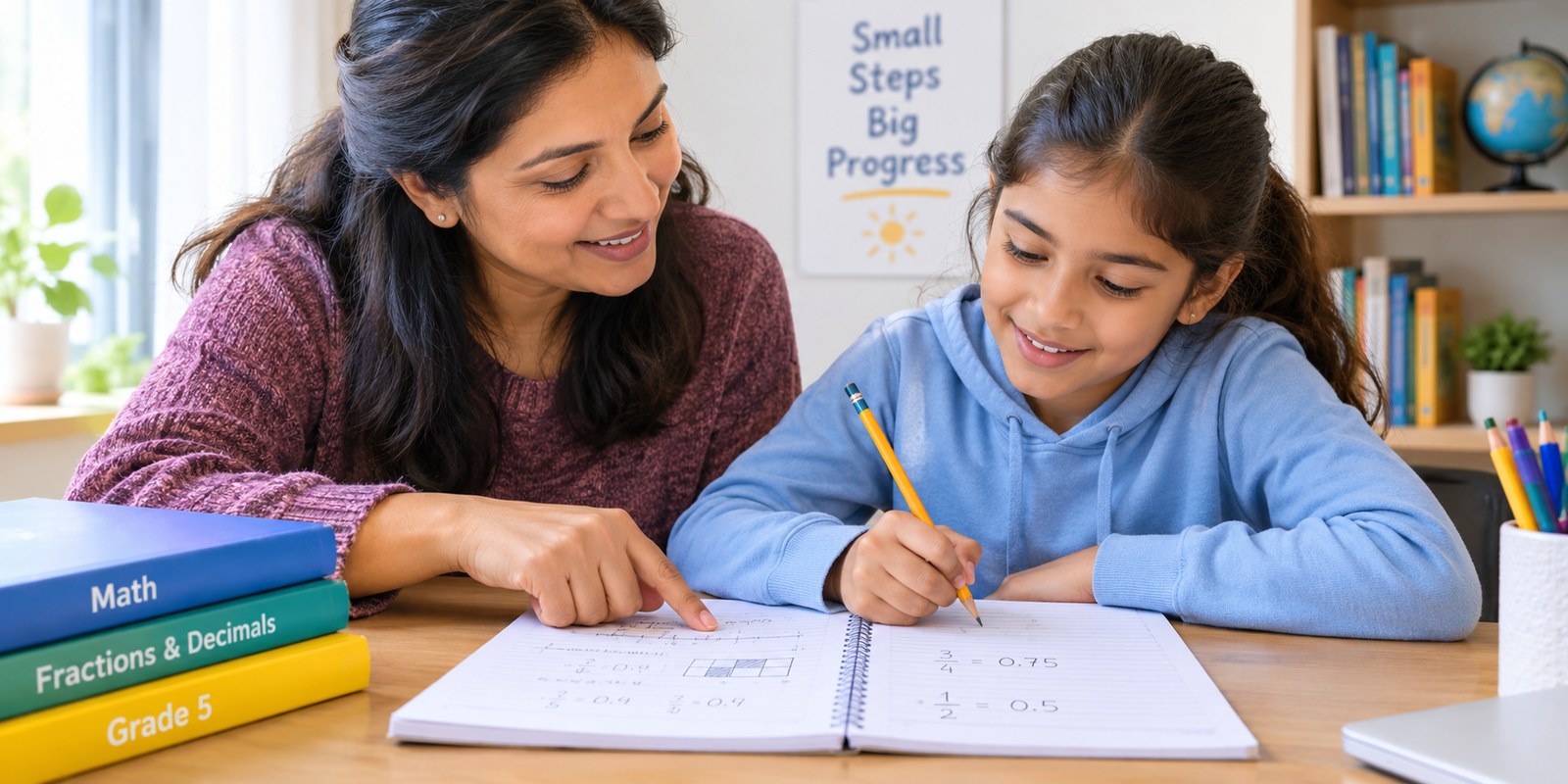
What to practice: Math is everywhere — counting stairs, sorting laundry by colour, comparing who has more grapes. These everyday activities build mathematical thinking far more effectively than worksheets. Baking together is one of the richest early math experiences available to any child.
✅ Early Literacy Readiness
- Recognises some letters, particularly the letters in their own name
- Understands that print goes left to right and top to bottom
- Can identify rhyming words
- Knows that letters make sounds
- Can hold a book correctly and turn pages one at a time
- Shows interest in books and being read to
What to practice: Read every day. Point to words as you read them. Play rhyming games in the car. Write your child's name together. Magnetic letters on the fridge are one of the most effective and underused literacy tools available.
✅ Independence and Self-Care Readiness
This is the dimension most parents underestimate — and teachers say it is one of the most impactful for early school success.
- Can manage bathroom needs independently
- Can open their own lunch containers and feed themselves
- Can put on and remove their own jacket, shoes, and backpack
- Can zip, button, or use Velcro fasteners
- Knows where their belongings are and can keep track of them
- Can attempt tasks independently before asking for help
What to practice: Start stepping back. Let your child dress themselves even when it takes longer. Let them open their own snacks. Resist the urge to intervene immediately — the frustration of figuring something out is not a problem to solve, it is a skill being built.
✅ Classroom Readiness
- Can sit and listen to a story for 10–15 minutes
- Can follow a routine when it is explained and shown
- Can work on a simple task for several minutes without adult redirection
- Understands that a teacher is an authority figure
- Can line up and wait without significant difficulty
What to practice: Establish consistent daily routines now — wake time, meals, quiet time, bedtime. Children who arrive in September already living by a predictable schedule adapt to the classroom routine dramatically faster than those who do not.
The Honest Truth About Abbotsford's Academic Starting Line
Here is something most kindergarten readiness guides do not tell you: in Abbotsford, the academic starting line is already uneven before children set foot in a classroom.
The Abbotsford School District's own 2024–25 Measuring Up report shows that only 62% of Grade 4 students are at grade level in literacy, and just 66% of Grade 7 students are proficient. These gaps do not appear out of nowhere at Grade 4. They begin in the early years — often before school starts — in the difference between children who arrived in Kindergarten with strong foundational skills and those who did not.
This is not about pressure. It is about opportunity. The years between ages 3 and 6 represent the single highest-return investment in a child's academic future that a parent can make. Skills built in this window are exponentially more durable than the same skills introduced at age 8 or 10.
A child who arrives in Kindergarten able to count with confidence, recognise letters, follow instructions, sit still for a story, and communicate their needs clearly is not ahead because they are smarter. They are ahead because someone invested in building those foundations during the window when it was easiest to do so.
How Best Brains Abbotsford Prepares Children for Kindergarten — and Beyond
Best Brains Learning Center in Abbotsford serves children from age 3 — specifically because this is when structured, play-friendly enrichment makes the most lasting difference.
The Best Brains early learner program is not preschool and it is not babysitting. It is a carefully designed academic enrichment experience delivered by BC-certified teachers in small groups, covering exactly the skills that predict kindergarten success and long-term academic confidence.
Early Math — Building the Foundation, Not Just the Facts
Best Brains' math curriculum for early learners does not start with memorisation. It starts with understanding — number sense, pattern recognition, sorting, comparing, and the kind of mathematical thinking that kindergarten teachers are looking for on Day One. By the time Best Brains early learners arrive in Kindergarten, numbers are not intimidating abstractions. They are familiar territory.
English and Literacy — Words, Stories, and the Joy of Reading
The Best Brains English program builds vocabulary, listening comprehension, letter recognition, and early phonics in a structured, progressive sequence. Children who enter Kindergarten with a rich vocabulary and a genuine love of books are measurably better positioned for reading success in Grades 1, 2, and 3 — the years when literacy gaps either close or begin to compound.
Abacus Mental Math — Cognitive Development That Goes Beyond Numbers
Best Brains' signature abacus program is one of the most powerful early learning tools available for children ages 3 and up. Research consistently shows that abacus training strengthens working memory, concentration, and the kind of focused attention that kindergarten classrooms require from the very first week. It also builds a child's relationship with numbers as something visual, tactile, and genuinely interesting — the opposite of the worksheet dread that arrives for many children in Grade 3.
General Knowledge — The Curious Child Has the Advantage
Best Brains' general knowledge component broadens the world for early learners — exposing them to science, nature, geography, and the kind of background knowledge that makes reading comprehension dramatically easier. A child who already knows what an ocean is, what seasons do, and how a caterpillar becomes a butterfly comprehends their first reading books at a fundamentally different level than a child encountering those concepts for the first time on the page.
BC Certified Teachers — Because Who Teaches Matters Most
Every session at Best Brains Abbotsford is led by a BC-certified teacher. This is not a minor detail. For children ages 3 to 6 — who are at their most neurologically receptive and whose relationship with learning is being formed right now — the quality of the adult guiding the experience shapes everything that follows.
At Best Brains, your child is not being supervised by a student, a volunteer, or someone hired to hand out worksheets. They are being taught by a credentialed educator who understands child development, how learning happens at this age, and how to build confidence alongside capability.
Free 24/7 Online Support — For the Whole Family
Learning does not stop at 4:00 PM, and neither does Best Brains. Every enrolled family has access to free online academic support 24 hours a day, 7 days a week — a resource no other major tutoring or enrichment provider in Abbotsford offers. When you have a question about your child's progress, a concern about a skill they seem to be missing, or simply want guidance on how to reinforce at home what they are learning in class — support is always available.
A Practical Timeline: What to Do Between Now and September
May and June — Observe and assess Use the checklist above to get an honest picture of where your child is. Celebrate the strengths. Note the gaps without anxiety — you have time.
July — Build routines and independence Establish the daily schedule that September will require. Practise self-care skills. Increase playdates and social exposure. Start your Best Brains summer program if you have not already — July is one of the most effective months to build early literacy and numeracy foundations because the relaxed summer pace reduces pressure.
August — Make school feel familiar Visit the school if you can. Walk past it. Talk about it positively and specifically — not "you are going to love school" but "your classroom is on the second floor and there is a playground with a big climbing structure." Read books together about starting school. Establish the bedtime and wake-time routine that September will demand, at least two weeks before the first day.
September — Trust the preparation Kindergarten teachers in Abbotsford are professionals who have welcomed hundreds of five-year-olds into their classrooms. Your child does not need to be perfect. They need to feel loved, prepared, and safe. The work you do between now and September makes that possible.
The Best Brains Summer Enrichment Camp — The Perfect Kindergarten Bridge
For children entering Kindergarten in September 2026, Best Brains Abbotsford's Summer Enrichment Camp runs from July 6 to August 28, 2026, Monday to Friday, 12:00 PM to 4:00 PM, for children ages 6 to 12. The structured daily program — covering STEM activities, math and English enrichment, art and craft, and communications — is the ideal bridge between the relaxed pace of summer and the structured demands of September.
Children who spend their summer in a structured, teacher-led environment arrive in September already practised at sitting, listening, following instructions, and engaging with academic content. That is not a small advantage. For many children, it is the difference between a confident first week and a stressful one.
Book Your Child's Free Assessment Today
Whether your child is starting Kindergarten in September, already in the early primary grades, or anywhere in between — a free academic assessment at Best Brains Abbotsford gives you a clear, honest picture of exactly where they stand and what comes next.
No obligation. No pressure. Just information you can use to make the best decision for your child.
Best Brains Learning Center — Abbotsford, BC 📍 Serving Abbotsford, Langley, Chilliwack, Mission and the Fraser Valley 📞 236-622-2074 🌐 bestbrains.com/ca-en/abbotsford 📧 abbotsford@bestbrains.com
The best time to prepare your child for school was the day they were born. The second best time is today.
Frequently Asked Questions
When should I start preparing my child for Kindergarten in Abbotsford? Ideally, structured preparation begins at least six months before September — so January through March for a September start. However, meaningful progress can be made in the May to August window, particularly through a structured summer enrichment program.
What age does Best Brains Abbotsford accept? Best Brains serves children from age 3 through Grade 12. The early learner program for ages 3 to 6 is specifically designed around kindergarten readiness and early primary success.
My child knows their ABCs and can count. Are they ready for Kindergarten? Academic basics are a good start, but kindergarten readiness is broader than that. Social confidence, emotional regulation, independence, and the ability to follow instructions in a group setting are equally important — and often the areas where children benefit most from structured preparation.
Does Best Brains help with the emotional side of starting school — separation anxiety, nerves, and so on? Indirectly but powerfully. Children who attend a structured program with a consistent teacher and familiar peers before Kindergarten have already practised separating from parents, following group instructions, and managing a structured day. This experience is one of the most effective natural buffers against first-day school anxiety.
How is Best Brains different from preschool or daycare? Preschool and daycare provide care and social experience. Best Brains provides structured, curriculum-based academic enrichment delivered by BC-certified teachers. The two serve different and complementary purposes — many Best Brains families use both.
Sources: Abbotsford School District Kindergarten Registration and Gradual Entry information 2025–26 · Abbotsford School District Measuring Up Report 2024–25 · Parents Canada — Kindergarten Readiness Checklist · Bright Horizons — Kindergarten Readiness Guide · BC Ministry of Education Early Learning Framework · Research on abacus training and working memory: Stigler, J.W. (1984), Lee, S.Y. et al. (2021)