Mississauga - Cooksville
What Should My Child Know in Math? An Ontario Parent’s Guide for Grades 1–8
What Should My Child Know in Math? An Ontario Parent’s Guide for Grades 1–8
By Best Brains Cooksville
“Is my child where they should be in math?”
It is one of the most common questions parents ask us at Best Brains Cooksville—and it is not always easy to answer from a report card alone.
A child may be earning satisfactory marks but still rely heavily on prompts. Another child may understand concepts well but work slowly because basic number facts are not yet automatic. Some students can complete a worksheet correctly but struggle when the same idea appears in a word problem or an unfamiliar situation.
Ontario’s elementary mathematics curriculum builds skills progressively from Grade 1 through Grade 8 across number sense, algebra, data, spatial sense, financial literacy, mathematical processes and related learning. The expectations become more complex each year, but the goal is not simply to memorize more procedures. Students are expected to understand mathematical relationships, choose strategies, explain their thinking and apply what they know.
This guide turns some of those expectations into practical checkpoints for parents. It is intentionally a summary, not a complete curriculum or assessment tool. A child does not need to perform every skill perfectly on demand, and classroom pacing can vary. Use the guide to notice strengths, identify questions worth asking and understand how one year of math prepares students for the next.
How to Use This Guide
As you read your child’s grade section, look beyond whether they can produce the right answer. Ask:
-
Can they explain how they got the answer?
-
Can they solve the same type of problem when the numbers or wording changes?
-
Do they know more than one strategy when appropriate?
-
Can they estimate whether an answer is reasonable?
-
Can they apply the skill in a real-life situation?
Those questions often tell you more about mathematical understanding than a page of completed calculations.
Grade 1 Math: Building Strong Number Foundations
Grade 1 is where children begin turning informal counting and number experiences into more structured mathematical thinking. A major goal is helping numbers feel meaningful—not just learning to recite them.
Important skills include:
-
Number sense to 50. Students learn to read, represent, compose, decompose, compare and order whole numbers up to 50. They begin seeing that a number can be represented in different ways—for example, 18 can be 10 + 8, 20 − 2, or a collection of 18 objects.
-
Addition and subtraction foundations. Children use objects, drawings, mental strategies and equations to solve early addition and subtraction situations and to recognize the relationship between the two operations.
-
Equal sharing and early fraction ideas. Sharing objects or spaces fairly helps children understand equal groups and equal parts before formal fraction work becomes more advanced.
-
Patterns, equality and data. Students identify, extend and create patterns; explore the meaning of the equal sign; and sort or organize simple data so they can describe what they notice.
-
Money awareness. Grade 1 students begin recognizing Canadian coins and bills and connecting money to everyday situations.
A simple home check: Ask your child to show two different ways to make 12, share 8 small objects fairly between two people, or explain which of two groups has more and how they know. The explanation matters as much as the answer.
Official Ontario curriculum: Grade 1 Mathematics – Ontario Ministry of Education
Grade 2 Math: Moving from Counting to Flexible Strategies
In Grade 2, students work with a larger number range and begin choosing more efficient strategies instead of relying on counting one-by-one. This is an important transition toward mathematical fluency.
Important skills include:
-
Number sense to 200. Students read, represent, compare and work with whole numbers to 200 while strengthening place-value understanding.
-
Addition and subtraction problem solving. Students build fluency with addition facts that make sums to 20 and related subtraction facts, and they use strategies to solve larger addition and subtraction problems.
-
Equal sharing and fractions. Children use fair-sharing situations and equal parts to deepen early fraction concepts and connect them to everyday examples.
-
Measurement and time. Students compare and measure attributes such as length and develop stronger understanding of time and duration.
-
Representing money amounts. Students explore different combinations of coins and bills that can represent the same amount—a useful connection between number sense and financial literacy.
A simple home check: Give your child a total such as 15 and ask for several addition combinations that make it. Or ask them to show the same money amount in two different ways. Flexible thinking is the goal.
Official Ontario curriculum: Grade 2 Mathematics – Ontario Ministry of Education
Grade 3 Math: Multiplication, Division and Stronger Mathematical Connections
Grade 3 is a significant year because students begin using multiplication and division more formally while continuing to strengthen place value, fractions, measurement and financial literacy.
Important skills include:
-
Number sense to 1,000. Students read, represent, compare and decompose three-digit numbers and use place value to reason about quantity.
-
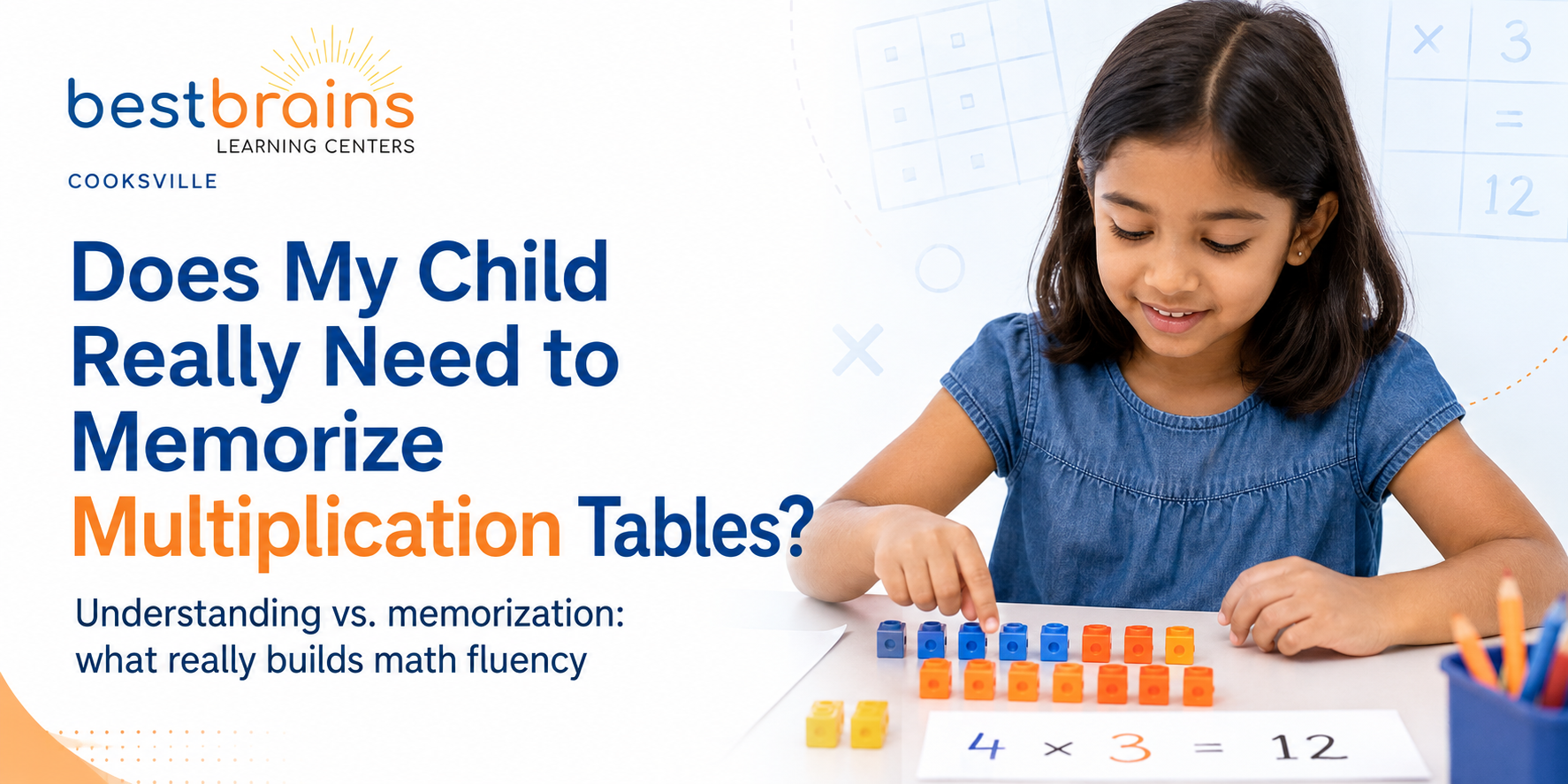
Multiplication and related division. Students develop multiplication facts for 2, 5 and 10 and connect each multiplication fact to related division facts rather than treating the operations as unrelated skills.
-
Equivalent fractions. Students begin recognizing that different-looking fractions can represent the same amount, building a foundation for the more complex fraction work ahead.
-
Area, measurement and time. Students measure, compare and reason about attributes of objects and shapes and strengthen their understanding of time.
-
Money and change. Students solve everyday financial situations, including finding change in whole-dollar transactions.
A simple home check: Ask, “If 5 groups have 4 objects in each group, how many objects are there? How could division help us check?” Then ask your child to draw or model the problem. Connecting representations builds understanding.
Official Ontario curriculum: Grade 3 Mathematics – Ontario Ministry of Education
Grade 4 Math: Multi-Step Thinking Becomes More Important
By Grade 4, students are expected to coordinate several skills within one problem. Accuracy still matters, but so do planning, organization and the ability to explain why a strategy works.
Important skills include:
-
Whole numbers to 10,000 and early decimal work. Students extend place value and begin making stronger connections between whole numbers, fractions and decimals.
-
Multiplication facts to 10 × 10. Increasing fluency with multiplication facts helps free up working memory for longer and more complex problems.
-
Division with larger numbers. Students use strategies to divide two- and three-digit numbers by one-digit numbers and interpret what the quotient and remainder mean in context.
-
Multi-step problem solving. Problems increasingly require students to decide which operations to use and in what order rather than simply following a visible pattern.
-
Area and metric measurement. Students work with measurement relationships and apply them to rectangles and other practical spatial situations.
A simple home check: Give your child a two-step shopping or measurement problem without telling them which operation to use. Ask them to explain their plan before calculating. The ability to choose a strategy is a key part of Grade 4 readiness.
Official Ontario curriculum: Grade 4 Mathematics – Ontario Ministry of Education
Grade 5 Math: Fractions, Decimals and Percentages Start Connecting
Grade 5 mathematics asks students to move comfortably among different representations of quantity. Fractions, decimals and percentages begin to connect, and algebraic thinking becomes more visible.
Important skills include:
-
Number sense to 100,000. Students work with larger whole numbers and continue developing place-value reasoning and estimation.
-
Multiplication facts to 12 × 12. Strong fact fluency supports multiplication, division, fraction work and later algebra.
-
Fractions, decimals and percentages. Students compare and represent these forms and begin seeing how they describe related quantities.
-
Introductory algebraic equations. Students use variables, expressions and equations to represent relationships and solve unknowns.
-
Budgeting and value. Financial literacy becomes more practical as students think about spending, saving, budgeting and comparing value.
A simple home check: Ask your child to explain how 1/2, 0.5 and 50% are connected, or compare two sale prices and explain which is the better value. Being able to justify the comparison is more valuable than memorizing a shortcut.
Official Ontario curriculum: Grade 5 Mathematics – Ontario Ministry of Education
Grade 6 Math: Applying Skills Across Longer Problems
Grade 6 often reveals whether earlier foundations are secure. Students must now combine number sense, operations, fractions, decimals, algebra and geometry with less step-by-step prompting.
Important skills include:
-
Whole numbers to 1,000,000 and integers. Students extend place value and work with positive and negative numbers in meaningful contexts.
-
Divisibility and number relationships. Students use properties and divisibility ideas to reason about factors, multiples and efficient computation.
-
Multi-step fraction and decimal work. Students solve problems that require several operations and must keep track of both procedure and meaning.
-
Algebra with multiple terms. Expressions and equations become more complex, requiring students to recognize relationships and work systematically.
-
Angles, measurement and metric conversions. Students reason about angle relationships, measurement and metric units rather than treating each as an isolated formula.
A simple home check: Ask your child to estimate the answer to a fraction or decimal problem before solving it. If the exact answer is very different from the estimate, can they recognize that something went wrong and find the error? That self-checking habit becomes increasingly important.
Official Ontario curriculum: Grade 6 Mathematics – Ontario Ministry of Education
Grade 7 Math: Preparing for More Formal Algebra and Geometry
Grade 7 is a bridge between elementary mathematics and the more formal algebraic thinking students will encounter in secondary school. Problems require stronger reasoning, clearer written work and greater independence.
Important skills include:
-
Rational numbers and integers. Students work with positive and negative values and deepen their understanding of fractions, decimals and related number relationships.
-
Adding and subtracting fractions. Students use equivalent fractions and common denominators to combine fractional quantities accurately and explain their reasoning.
-
Multi-term algebraic equations. Students represent relationships with algebra and solve increasingly complex equations while maintaining equality.
-
Circles, surface area and volume. Geometry expands from identifying shapes to reasoning about measurements and relationships among dimensions.
-
Exchange rates, interest and financial goals. Financial literacy includes more realistic situations involving currency, interest and planning toward goals.
A simple home check: Present a problem where a student must choose between a fraction, decimal or percentage representation. Ask which form makes the problem easiest and why. The ability to select and defend an approach shows growing mathematical maturity.
Official Ontario curriculum: Grade 7 Mathematics – Ontario Ministry of Education
Grade 8 Math: Building the Foundation for Grade 9
Grade 8 brings many elementary concepts together and expects students to apply them with more abstraction and independence. Strong foundations here make the transition to secondary-school mathematics much smoother.
Important skills include:
-
Scientific notation and exponents. Students work with very large and very small quantities and strengthen their understanding of powers and exponent relationships.
-
Fractions, decimals, percentages and integers. Students operate flexibly across rational-number representations and select forms that make sense for a problem.
-
Proportions and multi-term algebra. Students use proportional reasoning and algebraic expressions or equations to model and solve increasingly complex situations.
-
The Pythagorean theorem and angle relationships. Students apply geometric relationships to solve problems and explain how measurements are connected.
-
Simple and compound interest. Students compare financial situations involving interest and develop stronger financial decision-making skills.
A simple home check: Ask your child to solve a proportional or algebraic problem and then explain how they would verify the answer. In Grade 8, being able to reason, communicate and check work is just as important as executing the steps.
Official Ontario curriculum: Grade 8 Mathematics – Ontario Ministry of Education
The Big Picture: Math Skills Build on One Another
The most important pattern across these grades is progression.
Counting becomes place value. Place value supports operations. Multiplication supports division and fractions. Fractions connect to decimals, percentages, ratios and proportions. Patterns lead to algebra. Measurement develops into area, volume and geometry. Everyday money ideas grow into budgeting, exchange rates and interest.
When an earlier skill is shaky, a child may still keep up for a while by memorizing procedures. The difficulty often appears later, when a new topic assumes that the earlier concept is already understood.
That is why a useful question is not only “Can my child do today’s homework?” but also “Does my child understand the foundation underneath it?”
Signs Your Child May Benefit from Extra Math Support
One difficult unit or one disappointing test does not automatically mean a child is behind. Instead, look for patterns over time, such as:
-
relying on counting for facts that should gradually be becoming more fluent;
-
knowing a procedure but being unable to explain why it works;
-
avoiding word problems even when basic calculations are accurate;
-
becoming stuck whenever a familiar skill appears in a new format;
-
making frequent place-value, sign or operation errors;
-
needing repeated adult prompting to decide how to begin;
-
losing confidence or saying “I’m just not good at math”; or
-
struggling with prerequisite skills whenever a new unit begins.
The earlier a gap is identified, the easier it is to target the underlying skill instead of repeatedly reteaching the newest assignment.
How Best Brains Cooksville Can Help
At Best Brains Cooksville, our goal is to help students build strong mathematical foundations while continuing to move forward.
Our Math program uses a structured, non-repetitive approach that introduces new concepts regularly and gives students opportunities to apply what they learn through computation, word problems, reasoning and real-world situations. Instruction is personalized so students can strengthen prerequisite skills while also being appropriately challenged.
For families who are unsure where to begin, a placement assessment can help identify a child’s current strengths and the areas that may need reinforcement.
Whether your child needs help closing a learning gap, building confidence or staying challenged beyond the classroom, the right starting point is understanding what they know now—and what they are ready to learn next.
Not sure where your child stands in math?
Contact Best Brains Cooksville to learn more about our Math program or arrange a free consultation and placement test.
Best Brains Cooksville
Unit 15 - 35 King St E
Mississauga, ON L5A 4E2
Call / text: 437-616-6716
Visit Best Brains Cooksville
Curriculum Note
This article is a parent-friendly summary of selected skills and is not a substitute for the complete Ontario Mathematics Curriculum, classroom assessment or your child’s teacher. Curriculum expectations are broader than the checkpoints listed here and include learning across all strands. For the complete expectations, examples and curriculum context, use the official Ontario Ministry of Education links included at the end of each grade section above.